Have you ever wondered how your food gets to the grocery store?
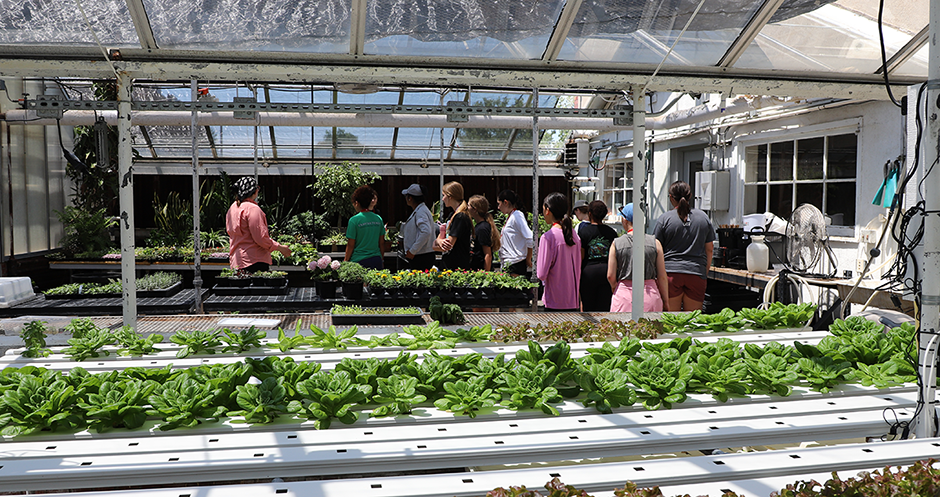
Thirteen high school students learned about different food system life cycles at the Food Systems Camp, part of Nebraska 4-H’s and the University of Nebraska–Lincoln’s Big Red Academic Summer Camps held June 7-12, 2026.
Led by Christine Barta, plant systems learner and partnership engagement coordinator in the Department of Agronomy and Horticulture, the camp helped students understand where their food comes from and the science behind how it’s produced. Through hands-on learning, participants explored the connections between soil, plants, agriculture and the foods they eat every day.
“Thanks to our partnership with Nebraska 4-H, we’re able to reach youth across the state and provide meaningful educational experiences that broadened our students’ understanding of food systems,” Barta said.
“Whether or not they choose to come to school here in the future, broadening their worldviews through a reliable, trustworthy structure like 4-H is invaluable to the university.”
Day One: Introduction to plants, soils and the food system
Students attended several lectures and activity sessions:
Intro to Plant & Soil Science, Food Systems lectures with Christine Barta
A Look at How Plants Function in Their Environment and an outdoor exploration session with Christian Elowsky
Soil Function and Texture lecture and various hands-on activities with Michael Kaiser
Day Two: Production systems field day
Horticulture Research Gardens tour with Christian Stephenson
Husker Produce Farm tour and planting activity with Sam Wortman and Collin Eaton
Hydroponics & Our Future hands-on activity and exploration with Evan Allberry (undergraduate horticulture student) and Christine Barta
Production Systems lecture
Day Three: Field trip
Field trip to a local Hy-Vee grocery store, Open Harvest Co-op Grocery and the Food Bank of Lincoln
Food processing, distribution and marketing lecture and design activity
Day Four: Final project prep and workday
Students identified an issue within the local food distribution system and created a pitch for a potential solution.
Day Five: Presentation day
After exploring how food is grown, processed and marketed, students were challenged to identify a real-world food system issue and create a solution that they pitched — Shark Tank style — to their peers and special guest panelists.
Panelists included Dave Lamb, chief learning officer of the Engler Agribusiness Entrepreneurship Program; Bob Henrickson of Plant Nebraska; and Garret Ostrander, a plant and landscapes systems undergraduate student working at Plant Nebraska.
Barta awarded the top three student pitches in front of their peers, friends and family.
The first-place pitch touched on expanding access to culturally relevant flavors and ingredients by producing the herbs, spices and ingredients and providing them at local food banks free of charge.
The second-place pitch dealt with innovations in sustainable pest management without harming native and beneficial insect populations.
The third-place pitch aimed to increase awareness of and access to aquaponics production in Nebraska and to improve production safety by minimizing the potential for foodborne illnesses.
Food Systems Camp was received well, with many students saying they would be interested in pursuing an education in plant and soil sciences. Organizations, business and individuals interested in supporting future Food Systems Camps are encouraged to reach out to contact Christine Barta at cbarta3@unl.edu">cbarta3@unl.edu.
More details at: https://go.unl.edu/food-systems-camp