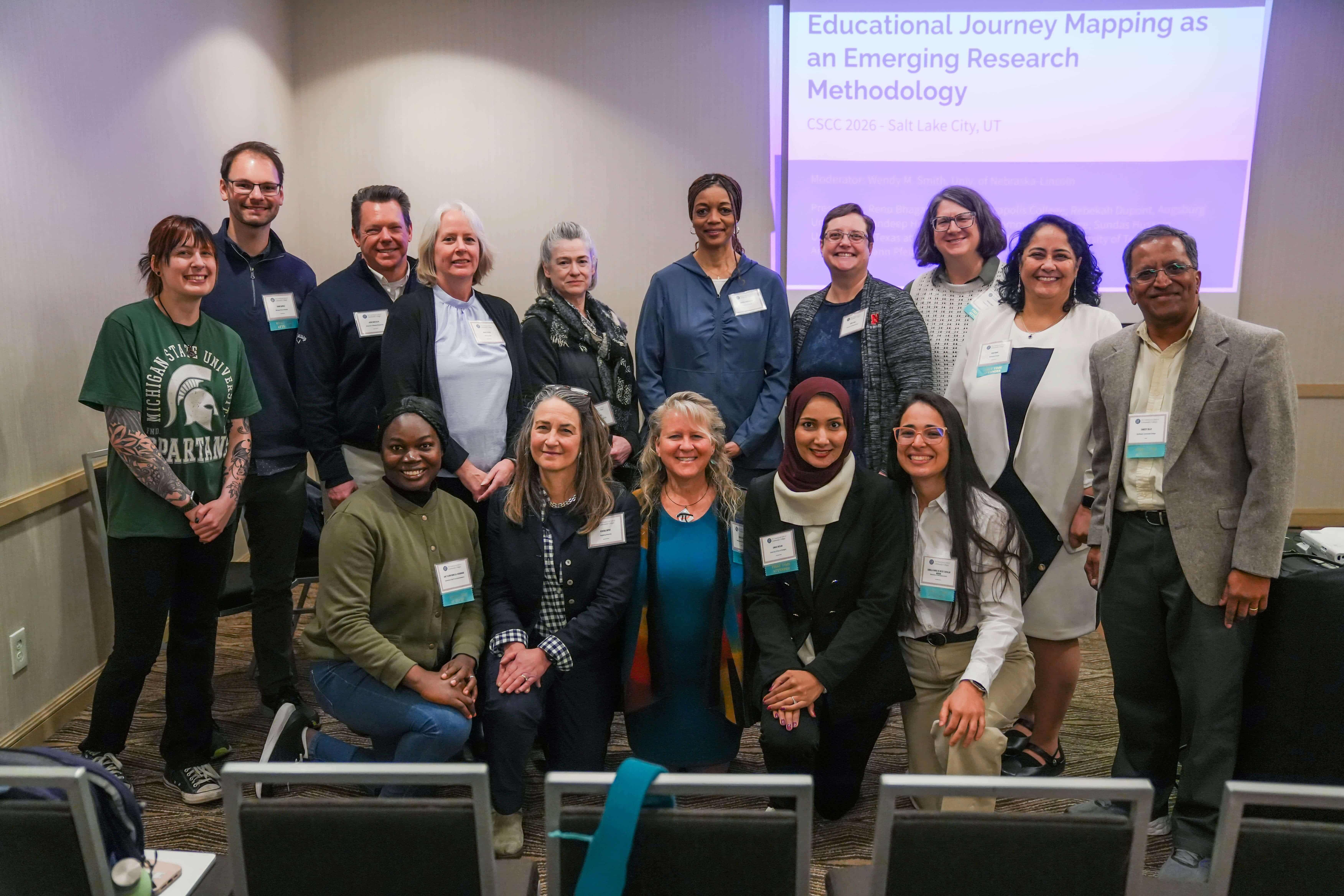
Entering our final year, as I reflect on the PROSPECT S-STEM project, I am so thankful for the community we have created. Yes, we had research goals and are producing impactful research, but, more importantly, we have formed a community. Isolation is real in academia, and the rules around S-STEM projects (caps on how many proposals an institution can submit each year) pretty well guarantee that most of us do not have local colleagues engaged in similar work. Research has demonstrated time and time again that having a diverse group of people working together toward common goals yields the most creative problem solving and effective strategies. I love how our PROSPECT community has formed and supports each other. I know our impact is bigger because of how we work together. I really enjoy connecting in small and large groups with the PROSPECT community, and always feel like I learn and gain so much from all of you!
Community doesn’t happen by accident; I appreciate that everyone has bought in to having community goals for our team, and spending time on relational activities to start our meetings. Even though many of us might think of communities as largely defined by proximity, luckily for us, community does not depend on geography. Being in community involves intentional choices: to be wholly present for interactions; to share aspects of your life with the group; to follow our community agreements; to lift each other up; to support each other and respond to requests; to problem-solve together; and to actively care for each other. Communities also have effective communication strategies, distributed leadership practices, and transparent decision-making.
Part of being in a community is celebrating together. We’d love to share celebrations of all sizes with each other, and invite you to share during our project meetings and/or via our newsletter by contributing a short story. For instance, in Nebraska, due in large part to the local community formed around our S-STEM and focus on supporting transfer students, for the first time ever, intro computer science will be on the docket for a statewide syllabus (the meeting is scheduled for July!). A common syllabus with common learning outcomes means that course will be on the “automatic” transfer list across institutions. What large or small successes would you like to celebrate with the PROSPECT community?
As we look toward the end of our grant funded project, the end of current external funding does not mean that our community has to end. The relationships we’ve formed are real. It was great to see so many of you in person in Salt Lake City for CSCC, and we missed those who were not able to attend (either for planned or unplanned reasons; looking at you, O’Hare!).
We have some time set aside June 18 (10am-2pm EDT/ 9am-1pm CDT) for a longer PROSPECT meeting to talk through our plans for the coming year and beyond. We’ll be discussing formal ways to continue our collective work (with all who have the interest & capacity). I hope to see many of you there--this community doesn’t work without all of us making it a priority. If you cannot attend on June 18, I’m happy to set up an alternative time to talk with you.
Thankfully, our ongoing relationships do not depend on grant funding. I look forward to engaging in community discussion with all of you and exploring formal and informal ways to continue our connections in the future.
This article was provided by Wendy Smith, University of Nebraska-Lincoln