By Ronica Stromberg
Brooke Mott has been using her 2021-2023 experience as a master's student in the School of Natural Resources to better the experience of today's graduate students.
As the school's recruitment and retention coordinator for almost two years, Mott has streamlined processes and furthered communications and connections with students. Still, she said she was surprised when she heard she would receive a staff recognition award at the school's April 11 spring banquet.
"I almost teared up a little bit, because I had been feeling a little overwhelmed, that I'd maybe taken on too many projects that may or may not be useful," she said. "To have that email come through when I didn't even know that I had been put up for award made me feel very appreciated and like I am where I'm supposed to be right now."
Mark Burbach, the human dimensions professor who advised Mott in her master’s program and nominated her for the award, said he had been struck by how she continued to elevate the support she provided School of Natural Resources students and faculty.
"Brooke has consistently improved every aspect of her work—streamlining office operations, strengthening communication with students and faculty, enhancing coordination with Graduate Studies and other departments and developing valuable tools and resources," Burbach said. "I often find myself thinking, 'This is such a great idea. Why didn’t we do this sooner?'"
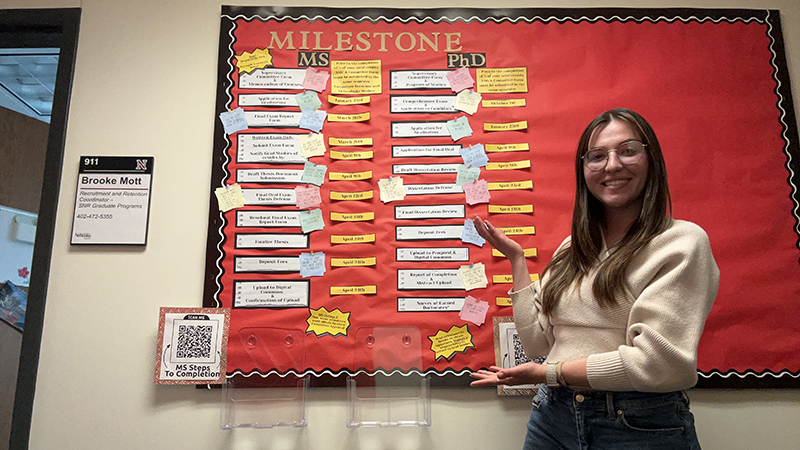
One such idea, the Graduate Student Milestone Planning Timeline, Mott recently finished drafting online. She said she hopes to roll out one timeline for master's students and one for doctoral students by summer.
The calendar-like timelines include deadlines for important milestones in students’ programs and suggestions for when to tackle smaller tasks along the way. Students may get an idea of when they might start tasks like filling out their memorandum of courses, forming a supervisory committee and writing their proposal.
"It's just a thing that they can put up on the wall and think, 'OK, this seems like I have so much time, but it actually goes really fast, and about now is a great time to start working on this,'" she said.
Follow the rest of the story at https://snr.unl.edu/aboutus/what/newstory.aspx?fid=1337