By Kait Chapman, Extension Educator in Lancaster County
When it comes to “good” bugs, we often think about the value of pollinators, like bees, or maybe even predators, like lady beetles, that provide a much-needed service in the garden. Another group of beneficial insects, which are sometimes overlooked, but just as important, are decomposers: nature’s hidden helpers.
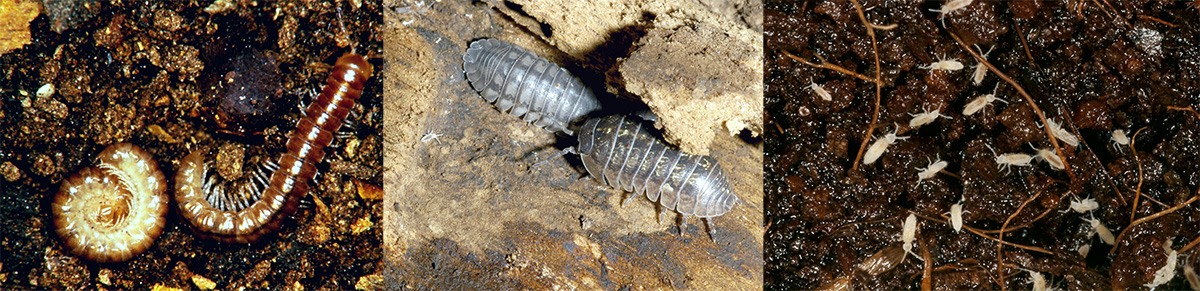
Decomposers are organisms that break down dead plant material and other organic debris. Often called “nature’s clean-up crew,” they play a vital role in recycling nutrients and maintaining healthy soil. Many familiar “buggy” decomposers include springtails, millipedes and pillbugs (more commonly referred to as roly-polies here in Nebraska.)
These helpful critters aren’t limited to outdoor spaces. Occasionally, we may encounter them indoors, especially as hitchhikers in the soil of potted plants that have spent time outside or as accidental visitors in damp areas like bathrooms or basements. Springtails, for example, feed on fungi and decaying matter and are excellent indicators of healthy soil outdoors. They may wander inside when weather conditions become unfavorable, often in search of moisture or shelter. While finding insects indoors is never a popular discovery, these decomposers are temporary guests that do not cause damage or reproduce indoors.
If you notice decomposers like springtails or millipedes inside your home, the solution is usually simple by reducing excess moisture. Increasing ventilation or using a dehumidifier can make indoor conditions less appealing to them. Sealing small entry points around doors, windows or foundation cracks can also help prevent their entry. Because these insects do not truly infest homes, gentle removal with a broom or vacuum is sufficient, and pesticides are unnecessary and not recommended.
Although it’s still cold outside, spring garden days are ahead, and with them, the chance to appreciate our small, often misunderstood, decomposers. These tiny clean-up crews quietly work behind the scenes to support healthy ecosystems, making our gardens, landscapes and ecosystems thrive.