Enroll in NRES 416/816, BSEN 461 / 861: Artificial Intelligence, Computer Vision, and Data Analytics for Agriculture and Natural Resources
WHO: Students of all disciplines ready to explore AI, Computer Vision and Data Analytics for Interdisciplinary Research Applications
WHEN: Tuesdays and Thursdays, 9:30–11 AM | Fall Semester 2026
CREDITS: 3 credit hours
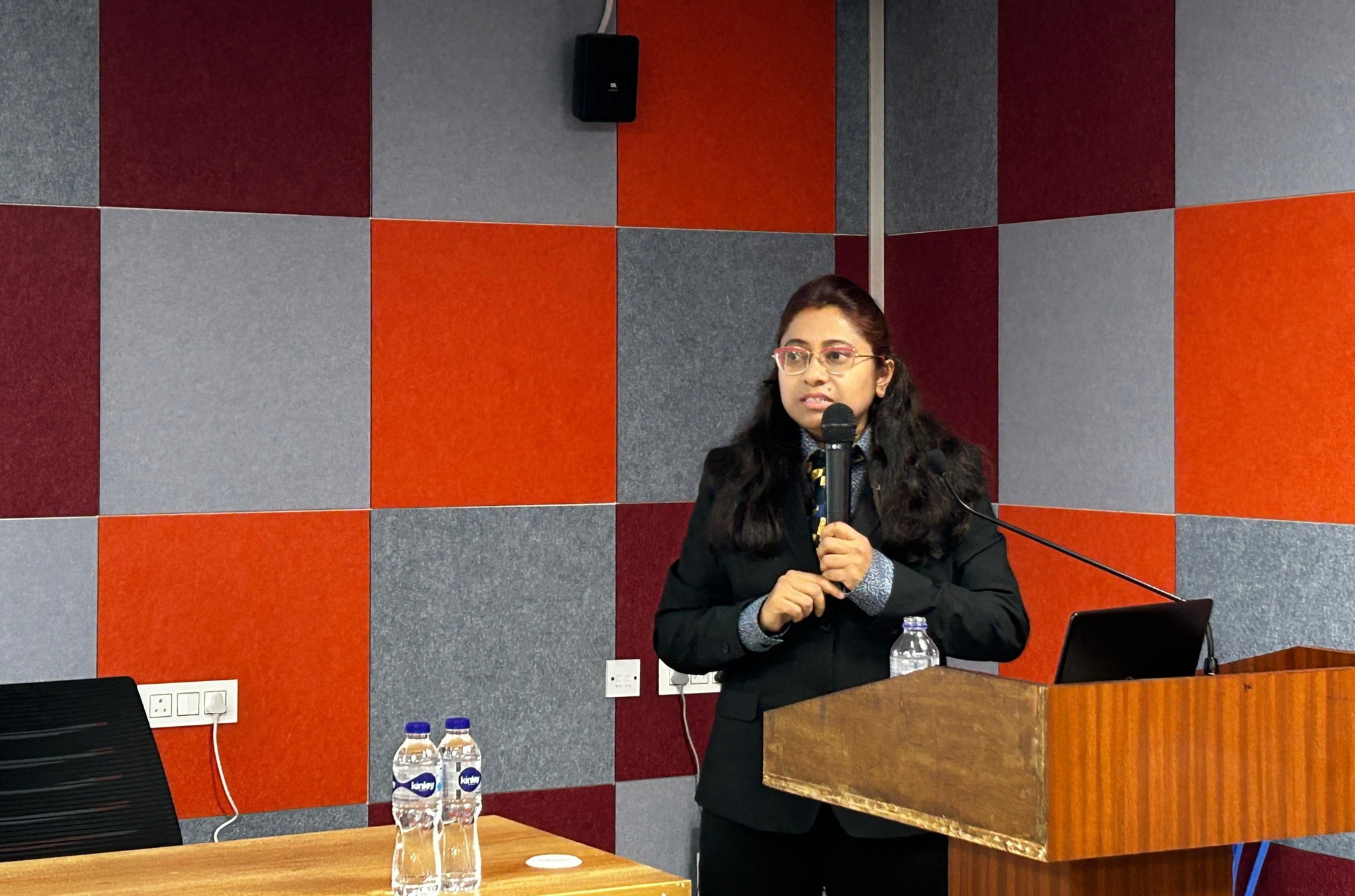
INSTRUCTOR: Dr. Sruti Das Choudhury
We are living in a time when data is taking over the world. We are heading to a reality where everybody in any organization is expected to have some data literacy and to be able to work with data to derive insights for a meaningful interpretation to make the processes more efficient. A detailed and profound practical knowledge of artificial intelligence, computer vision and data science will be essential even for students of non-computer science backgrounds to thrive in a successful career in today’s top research areas including digital agriculture, genetic engineering, medical science, finance and accounting, robotics and automation, to name a few. This beginner-friendly course will also benefit computer vision and machine learning engineers willing to approach the cutting-edge use of large language models (LLM) and agentic AI in both industry and academic sectors. The course will help students gain hands-on experiences in Python and Matlab with working knowledge in the state-of-the-art data visualization and statistical software tools. A special attention has been given while selecting the case studies involving data-driven techniques such that the students get updated with the innovations in the interdisciplinary research fields, e.g., image-based plant phenotyping, smart agriculture, and AI for environmental and biological science. Last but not least, the course will encourage students to participate in interdisciplinary research where computer vision and artificial intelligence play an instrumental role.
Learning Objectives:
1. Lectures on state-of-the-art methods related to computer vision and artificial intelligence applications in smart agriculture, and demonstrations on robotic applications in precision farming.
2. Computer vision techniques with hand-on practices in Matlab and Python to analyze visible light images, and comparatively less explored imaging modalities, e.g., hyperspectral, fluorescent, and infrared, for feature extraction.
3. Detailed understanding and implantations of traditional and neural-network based image segmentation techniques that form the basis of any computer vision based applications.
4. Introducing the interdisciplinary research field of image-based plant phenotyping with discussion and implementation guidance on open problems to promote high throughput core phenotyping facilities of UNL.
5. Basics of 3D model reconstruction using multi-view images with practical application in digital agriculture.
6. Introductory lessons on supervised and unsupervised machine learning techniques with programmatic demonstration in Python in google colab platform.
7. Introduction to Natural Language Processing: types, bag of words model implementation in Python on a real dataset.
8. Familiarity with iPantSeg+ tool: an interactive GUI-based segmentation tool to create binary images of plants and animals and compute shape based properties.
9. Neural network based time series prediction and forecasting for quantitative and qualitative propagation of stress in a plant as a function of time.
10. ChatGPT prompt engineering best practices for application development and to show how Large Language Model (LLM) APIs can be used in applications for a variety of tasks, including: summarizing (e.g., summarizing user reviews for brevity), inferring (e.g., sentiment classification, topic extraction), transforming text (e.g., translation, spelling & grammar correction), expanding (e.g., automatically writing emails).
11. Building a custom chatbot according to the students’ needs.
12. Hands-on experiences with recently innovated AI tools, e.g., Midjourney, Tome, Dall-E2
13. Generative AI for everyone: basics, tools, principles, ethics, bias and accountability.
14. Introduction to data visualization and statistical analysis tools: Tableau and Gretl.
15. Famiiarity with Retrieval Augmented Generation (RAG) architecture and Agentic AI.
16. Machine learning and statistical analysis using Rattle() GUI interface of R.
17. Academic writing using Latex software tool.
18. A mini class project where students will explore computer vision and artificial intelligence techniques to solve a problem in the domains of agricultural and natural resources of their own interest or relevant to their research work.
19. Fundamentals of literature review writing-reference styles and academic writing skill development.
This course is beginner-friendly; no prerequisites or coding experience required.