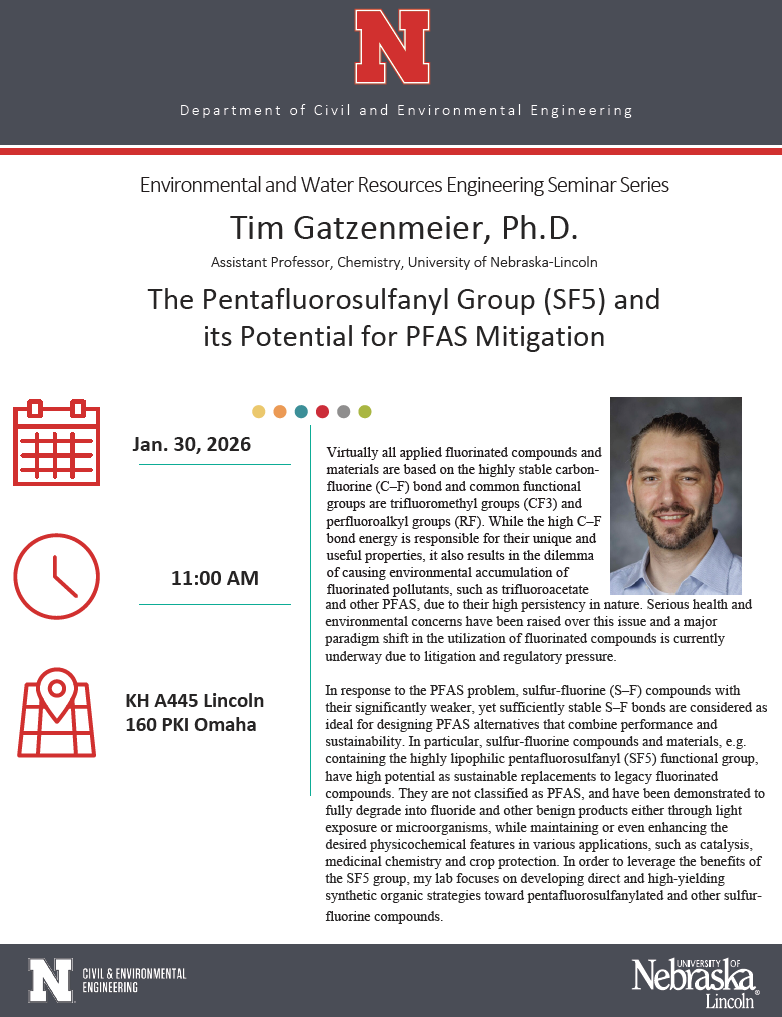
Speaker: Tim Gatzenmeier, Ph.D.
When: Jan. 30th, 2026 at 11:00AM
Where: KH A445 (Lincoln) and 160 PKI (Omaha)
Title: The Pentafluorosulfanyl Group (SF5) and its Potential for PFAS Mitigation
Abstract: Virtually all applied fluorinated compounds and materials are based on the highly stable carbonfluorine (C–F) bond and common functional groups are trifluoromethyl groups (CF3) and perfluoroalkyl groups (RF). While the high C–F bond energy is responsible for their unique and useful properties, it also results in the dilemma of causing environmental accumulation of fluorinated pollutants, such as trifluoroacetate and other PFAS, due to their high persistency in nature. Serious health and environmental concerns have been raised over this issue and a major paradigm shift in the utilization of fluorinated compounds is currently underway due to litigation and regulatory pressure.
In response to the PFAS problem, sulfur-fluorine (S–F) compounds with their significantly weaker, yet sufficiently stable S–F bonds are considered as ideal for designing PFAS alternatives that combine performance and sustainability. In particular, sulfur-fluorine compounds and materials, e.g. containing the highly lipophilic pentafluorosulfanyl (SF5) functional group, have high potential as sustainable replacements to legacy fluorinated compounds. They are not classified as PFAS, and have been demonstrated to fully degrade into fluoride and other benign products either through light exposure or microorganisms, while maintaining or even enhancing the desired physicochemical features in various applications, such as catalysis, medicinal chemistry and crop protection. In order to leverage the benefits of the SF5 group, my lab focuses on developing direct and high-yielding synthetic organic strategies toward pentafluorosulfanylated and other sulfurfluorine compounds.