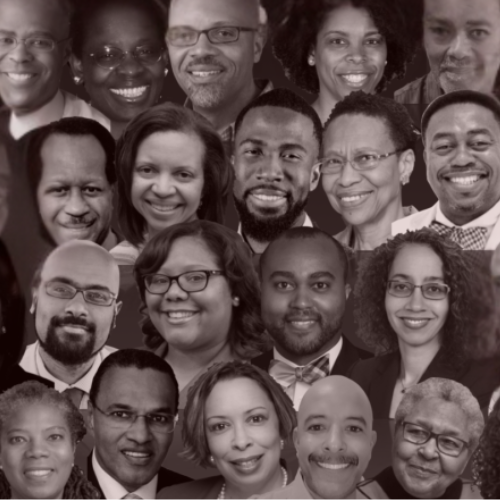
Black History month is celebrated in the United States annually in February to celebrate achievements by Black folks and recognize their central role in US history.
Check out the following resources for incorporating Black history into your mathematics classroom this month and year-round.
Toolkit: Black Lives Matter at School
The goal of Black Lives Matter at School is to spark an ongoing movement of critical reflection and honest conversation and impactful actions in school communities for people of all ages to engage with issues of racial justice. Find stories, resources and ideas highlighting Black Lives Matter at School from across the country.
Black History Month & Mathematics
In this blog post, Frances Harper, University of Tennessee associate professor of STEM (Mathematics) education, shares ideas and downloadable lesson plans for celebrating Black history in mathematics.
Mathematically Gifted & Black
Explore resources/initiatives that feature Black people in the mathematical sciences from Mathematically Gifted & Black.
Bringing Black History Month to STEM Classes
In this article for EducationWeek, Jordan Moeny offers suggestions for incorporating Black history into STEM courses, providing concrete examples of scientists to study in specific classes, such as mathematics.
Journeys of Black Mathematicians
Journeys of Black Mathematicians, a documentary film series by director George Csicsery, conveys a rich history with compelling stories of contemporary Black mathematicians, portraying their struggles and accomplishments. Sharing a wide range of individual choices, the films adhere to the proposition that a passion for mathematics and its pursuit can by itself produce positive social change and lead to a satisfying and meaningful life. The first two Journeys of Black Mathematicians films, Forging Resilience and Creating Pathways, can be purchased for streaming, screening, and on DVD. Nebraska Public Media members can also stream the films via PBS.
The University of Nebraska does not discriminate based on race, color, ethnicity, national origin, sex, pregnancy, sexual orientation, gender identity, religion, disability, age, genetic information, veteran status, marital status, and/or political affiliation in its programs, activities, or employment.