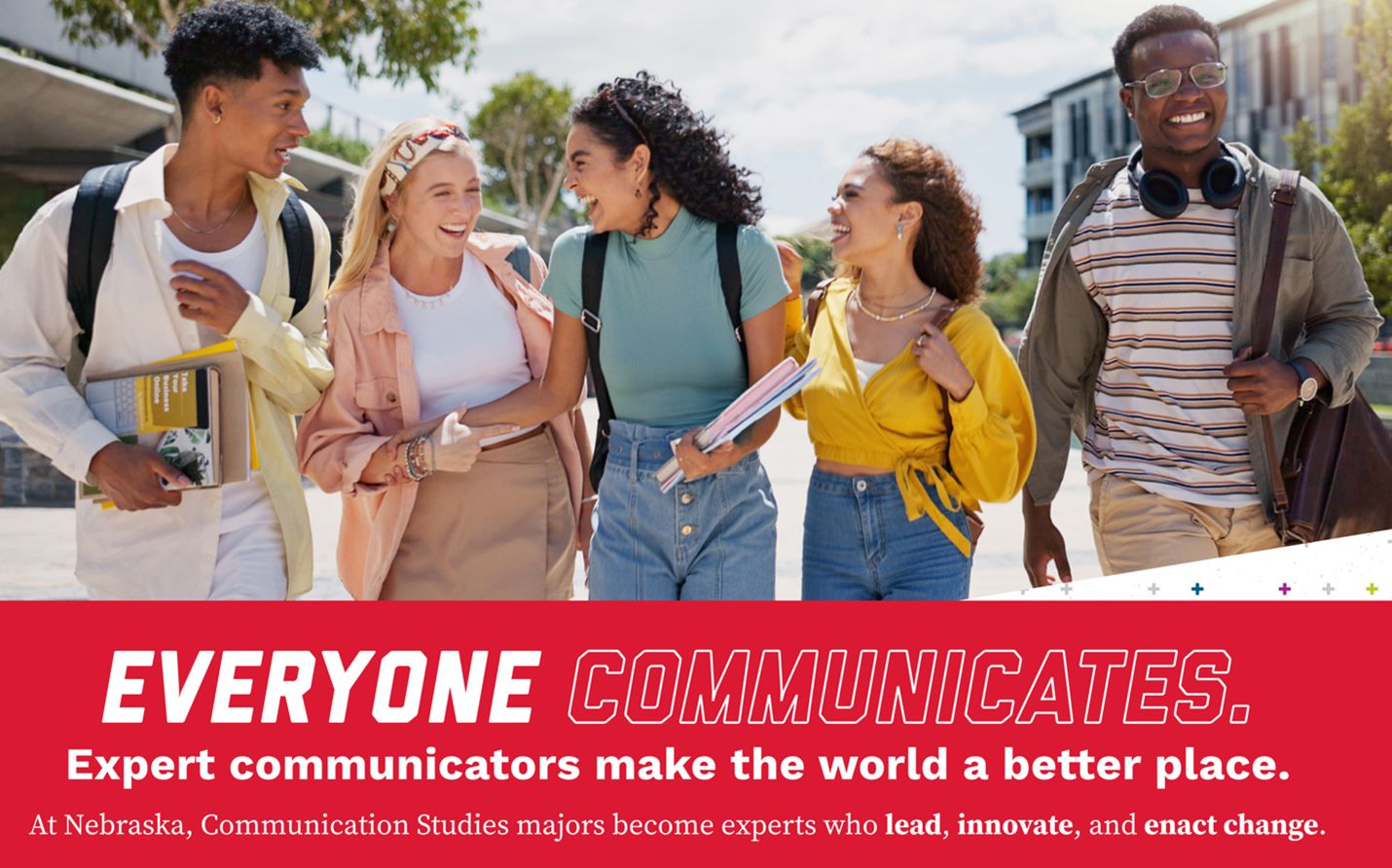
Effective communication is at the core of everything. Communication indicates the strength and well-being of communities. Communication constructs reality. And those who study it can make the world a better place. Studying communication sets you up for lifelong success across personal, professional, and public contexts. The Communication Studies faculty and graduate students are committed to student learning and development. Our major offers a robust curriculum designed to help students master the art and science of communication across public, personal, and professional contexts. With a focus on teaching our students how to better advocate, negotiate, and relate, our program equips students with critical skills that are essential for success in any career. Our students love the flexibility this major offers them - they have the option to tailor their educational journey by choosing to take classes across our curriculum or to focus their coursework in one of our primary areas:
• Communication and Relationships: focuses on the role of communication in our personal, professional, and community relationships. You will develop skills in how to manage conflict, lead teams and groups, engage in difficult conversations, build empathy, and effectively communicate in organizations and relationships. Courses like COMM 311 Intercultural and Intergroup Communication, COMM 386 Organizational Communication, and COMM 370 Family Communication focus on how to create connections, foster belonging, and communicate across difference, recognizing the importance of interpersonal, relational, and family communication to quality of life and well-being.
• Health Communication: focuses on the research and teaching of health communication to promote equitable health outcomes for all members in society. Courses like COMM 364 Communication, Medicine, and Health Equity, COMM 374 Mental Health Communication: Communication, Stigma, and (Dis)Connection, and COMM 456 Communicating Global Health focus on the role of communication in health promotion and the prevention of health conditions and diseases across personal, local, national, and global cultures and communities. You will learn to critically analyze meanings and understandings of health and health messages within individuals, relationships, health care organizations, media, communities, and policies with the goal of improving health for all people.
• Rhetoric and Public Culture: explores how people use language and symbols to shape ideas and influence others in everyday life, politics, and popular culture. You will learn about rhetoric’s role in influencing public life, identity, and social change. Courses like COMM 375 Theories of Persuasion, COMM 330 Freedom of Speech, and COMM 452 Media and Culture focus on the historical & emergent aspects of rhetoric produced by speech, media, technologies, and the body. You will learn how to analyze and evaluate communication as well as craft persuasive and impactful messages across a wide range of contexts, from digital platforms and political discourse to cultural narratives and everyday interactions.
While some of our students embrace the opportunity to tailor their coursework within one of these areas, many others value the opportunity to draw from across each of them to complete their Communication Studies major. This allows you to truly design your own path. It’s entirely up to you!
Experiential Learning Opportunities In addition to engaging coursework, we believe that hands-on learning is key to personal and professional growth. Our department provides a variety of experiential opportunities, including:
• Participation in faculty-led research labs like Narrative Nebraska, the Health, Equity, Advocacy, and Listening (HEAL) Lab, The Global Communication and Social Change Lab, The Communication and Identity Lab.
• Internships in roles such as peer coaching and community outreach.
• Leadership opportunities through the Undergraduate Advisory Board and department committees.
• Education abroad programs, including faculty-led courses in exciting destinations like Italy.
Meet Our Award-Winning Faculty Our faculty members are nationally recognized scholars and dedicated mentors committed to student success. Whether in the classroom, research labs, or advising sessions, our faculty prioritize providing a personalized and impactful learning experience. Students particularly value the hands-on learning approach and robust class discussions that are the hallmark of our classes.
Career Paths for Communication Studies Students Graduates of our program enjoy a high job placement rate, and our alumni have gone on to establish fulfilling careers in a wide range of fields. From marketing and healthcare administration to human resources and public service, our alumni are making an impact in their communities and in organizations such as Amazon, Pinterest, Lincoln Financial Group, Ameritas, KPMG, and Operation Smile, and so many more. No matter where your passions lie, a Communication Studies degree provides the foundation for a meaningful and versatile career.
Would you like to learn more? Reach out to Communication Studies Advisor, Kristin Plath Kristin.plath@unl.edu or Director of Undergraduate Education, Dr. Kathy Castle kcastle4@unl.edu!
More details at: http://www.comm.unl.edu/