By Russell Shaffer | IANR Communications
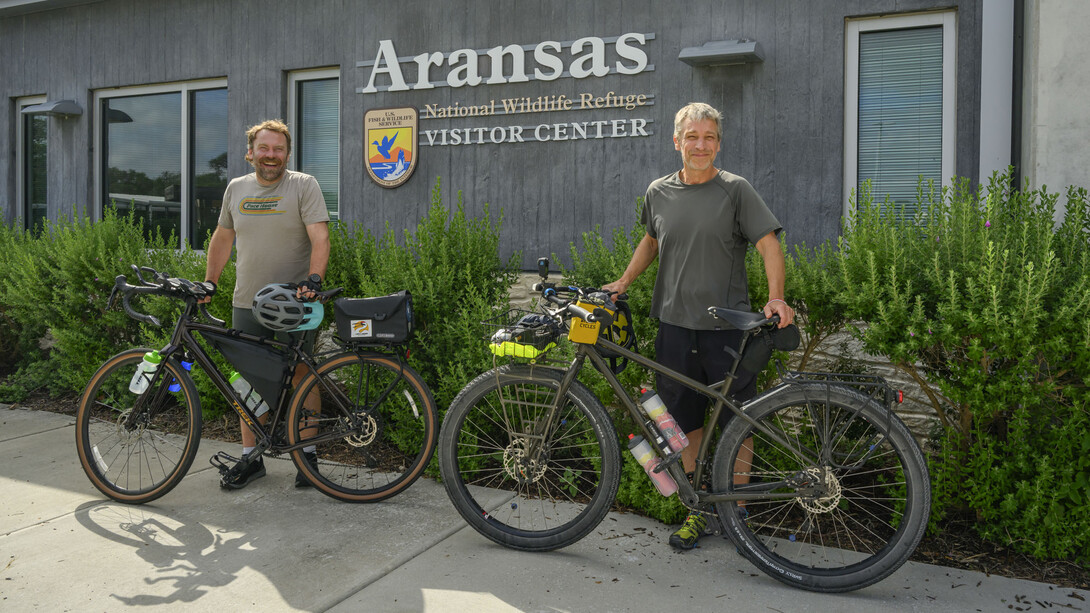
Each year, hundreds of whooping cranes migrate more than 2,500 miles from the Texas Gulf Coast to Canada’s boreal forest, following a path known as the Whooper Highway. Nebraska sits about halfway along the route. This year, two conservationists — one a Husker faculty member — are traveling the migration path on bicycles.
Michael Forsberg, a conservation photographer, founder of the Platte Basin Timelapse and research assistant professor in the university’s School of Natural Resources; and Andy Caven, director of central flyway programs at the International Crane Foundation, began their journey May 11. Averaging 65 miles per day, with 10 resting stops along the way, they plan to finish June 30 in the prairies of central Saskatchewan.
On June 5, Forsberg and Caven stopped at the Rowe Sanctuary Visitors Center in Gibbon, Nebraska, for a community conversation. Among the anecdotes they shared about the people they have met, the communities that have welcomed them, and the flora and fauna they have encountered — more than 150 species of birds and 300 species of plants identified so far — they talked about their goals for the ride.
First is to not only highlight these rare birds, but also the habitat loss of the Great Plains migration path that stretches the entire length of the country and a significant portion of the North American continent. Currently, about 3,500 square miles of wetlands are lost every year along the Whooper Highway.
“For me, it’s a journey of discovery,” said Forsberg, who has been photographing the whooping crane for the past seven years. “You don’t necessarily know what you’re going to learn until you’re out there doing it. And then sometimes you’re not sure what you learned until you get to the endpoint and you look in the rearview mirror.”
Caven’s work focuses mostly on conservation policy for whooping cranes, sandhill cranes and their habitats.
Follow the rest of Andy and Mike's story at https://ianrnews.unl.edu/article/husker-duo-bikes-whooper-highway-to-spotlight-endangered-cranes