By Becky Schuerman, Domestic Water/Wastewater Extension Associate in Nebraska
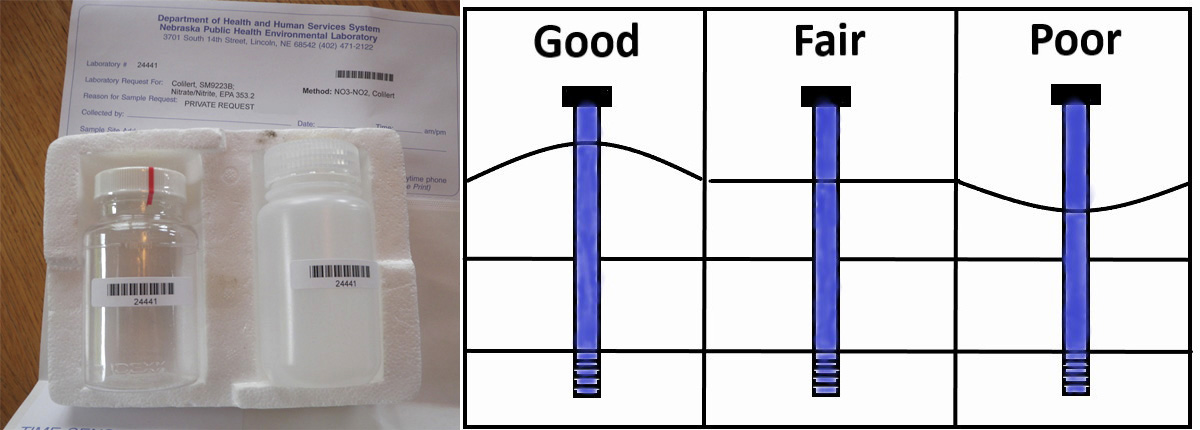
It is hard to believe that it is already spring! This means it is time for a spring inspection of your well, water treatment and onsite septic systems and performing necessary maintenance, when necessary. It is also time to order a test kit to collect your annual water samples for nitrate, total coliform and any other contaminants of concern in your area. Taking the time to follow the Well & Septic Owner’s Checklist helps protect the health of your family and our groundwater resources.
1. Inspect your wellhead and area around it this spring. Perform maintenance as necessary:
• Make sure secure cap, vent and electrical conduit are undamaged and secured.
• Keep sources of contamination away from it.
• Make sure your wellhead is a minimum of 12-inches above grade and the ground around it is sloped away with no depressions where water can sit stagnant.
• Keep tree plantings away from your well and water line locations.
• Check all hydrants, faucets and water pipes to make sure none are leaking or busted from freezing up over the winter. Properly fix/replace anything damaged.
2. At the same time, inspect your onsite septic system. Whether a Lateral System or Mound System, the same rules apply:
• Vehicles and other heavy objects kept away from drainfield and septic tank.
• Animal confinement areas not located over drainfield and septic tank.
• No sidewalks, drives, patios located over drainfield and septic tank.
• No buildings located over drainfield and septic tank.
• Perennial grass cover maintained; no trees or bushes planted over or near a drainfield and septic tank.
• Have septic tank pumped every 2–3 years, dependent on size of household and tank.
3. For a lagoon system:
• Keep fence around the lagoon intact and maintained.
• Maintain a 2 feet minimum operating depth of wastewater at all times.
• Keep grass on berm mowed and no trees should grow on the berm or in the lagoon.
• Keep aquatic vegetation in lagoon managed to allow good airflow and sunlight to reach the water surface.
4. Inspect water treatment systems making sure they are not leaking and operating properly.
5. Review recommended maintenance procedures and filter/media replacement for water equipment according to the manufacturer’s specifications. This includes water softeners, filtration systems and water heaters. Water heaters should be drained/flushed annually.
6. Test for Nitrate & Coliform bacteria annually — best done in spring.
7. Be aware of other possible contaminants of concern in your area. Your local NRD, health department or nearby community water supply can be great sources for this information.
8. If in doubt about issues, contact your licensed water well contractor or certified onsite wastewater professional to make the necessary repairs.
FOR MORE INFORMATION
For Certified Water Testing Laboratories in Nebraska, minerals and Contaminants in Drinking Water and other water well topics, go to https://water.unl.edu/article/drinking-water/nebguides. For Onsite Wastewater/Septic Systems go to https://water.unl.edu/sewage/educational.