By John Nelson, Extension Educator in Lancaster County
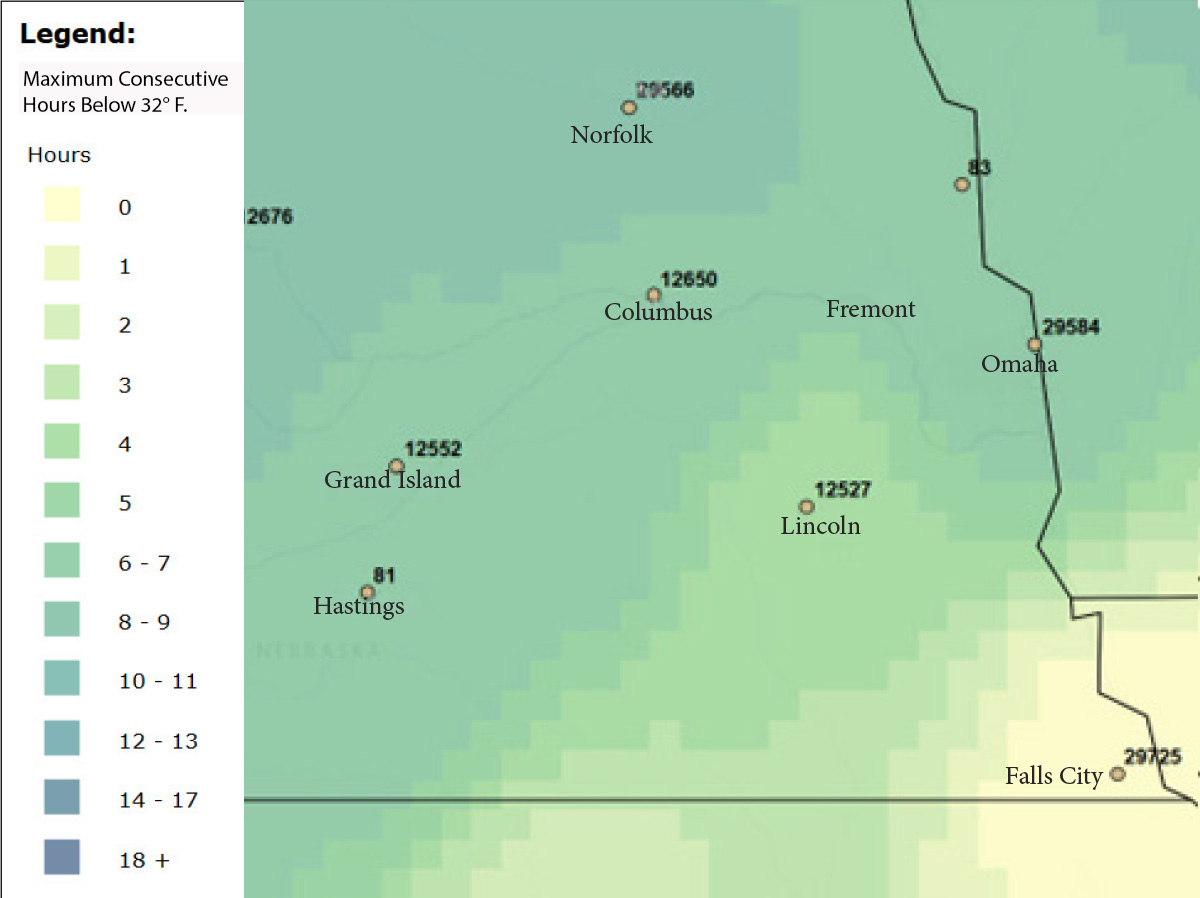
The frost event that occurred April 18–19 across much of the wheat-producing areas of western and central Nebraska also moved into spots in the southeast region of the state, and there is evidence of freeze damage in both wheat and alfalfa in our area.
The Nebraska Mesonet station at Wilber (Saline County) reported a five-hour period of temperatures below 32°F in the early morning of April 18. The lowest temperature reported at Wilber was approximately a two-hour period at 27°F. Similar temperatures were recorded at the Firth (Lancaster County) Mesonet station. At Firth, there was approximately a four-hour period below 32°F with a two-hour period at 28°F.
We have had numerous reports of freeze damage to wheat and cover crops across Southeast Nebraska. The abnormal weather patterns that resulted in a very mild winter and limited snow cover have put wheat development ahead of normal expectations, and much of our wheat in Southeast Nebraska was in the boot or early heading stage at the time of the freeze event. University of Nebraska–Lincoln CropWatch released a comprehensive article on assessing wheat-freeze damage across the state. https://cropwatch.unl.edu/assessing-freeze-injury-wheat. Wheat producers are encouraged to read this article and carefully scout fields before making management decisions.
It is possible that this light freeze event also affected some alfalfa fields in the region. In general, the light frost we experienced in the Southeast region may only burn exposed leaves. A moderate freeze (mid-20s for several hours) can kill the upper stem and terminal buds. However, plants often do regrow from lower axillary buds or from crown buds after a moderate freeze. This will delay growth and, as a result, first cutting will be delayed as well. University of Nebraska–Lincoln CropWatch also released a comprehensive article on assessing freeze damage in alfalfa: https://cropwatch.unl.edu/assessing-spring-freeze-damage-alfalfa-wait-you-cut. Alfalfa growers are encouraged to scout fields, especially fall and spring seedings, and fields under drought conditions.