by Sarvani Pemmaraju, Sarah Hartman and Alyson E. Lischka, MTEP 2.0 Research Hub members
The data MTEP teams have been contributing over the years through Plan-Do-Study-Act (PDSA) cycles are actively informing our collective learning. MTEP 2.0 Research Hub members have been closely analyzing these cycles, not only to understand the individual problems of practice being addressed by MTEP networked improvement communities (NICs), but also to uncover patterns and relationships across the MTEP network.
PDSA cycles offer an approach to enacting change through small, iterative improvements. Grounded in a clearly identified problem of practice, each cycle allows teams to plan an intervention, implement it, study its outcomes and refine their approach in subsequent iterations. Across MTEP, NICs have used the PDSA framework to drive continuous improvement in their teacher preparation programs, focusing on locally meaningful goals while also contributing to systemwide transformation.
To better understand this collective work, we examined a central question: What trends are present in the problems of practice that NICs are addressing using PDSA cycles? Drawing on annual reports submitted by NICs between 2020 and 2024, we compiled a database of 117 PDSA cycles. Each cycle was analyzed to capture what problem was addressed, how it was addressed, and how it connects to the broader partnership goals. We recognize that the submitted PDSA cycles are only a sample of the work NICs are completing, but this sample provides insights into the work across the partnership.
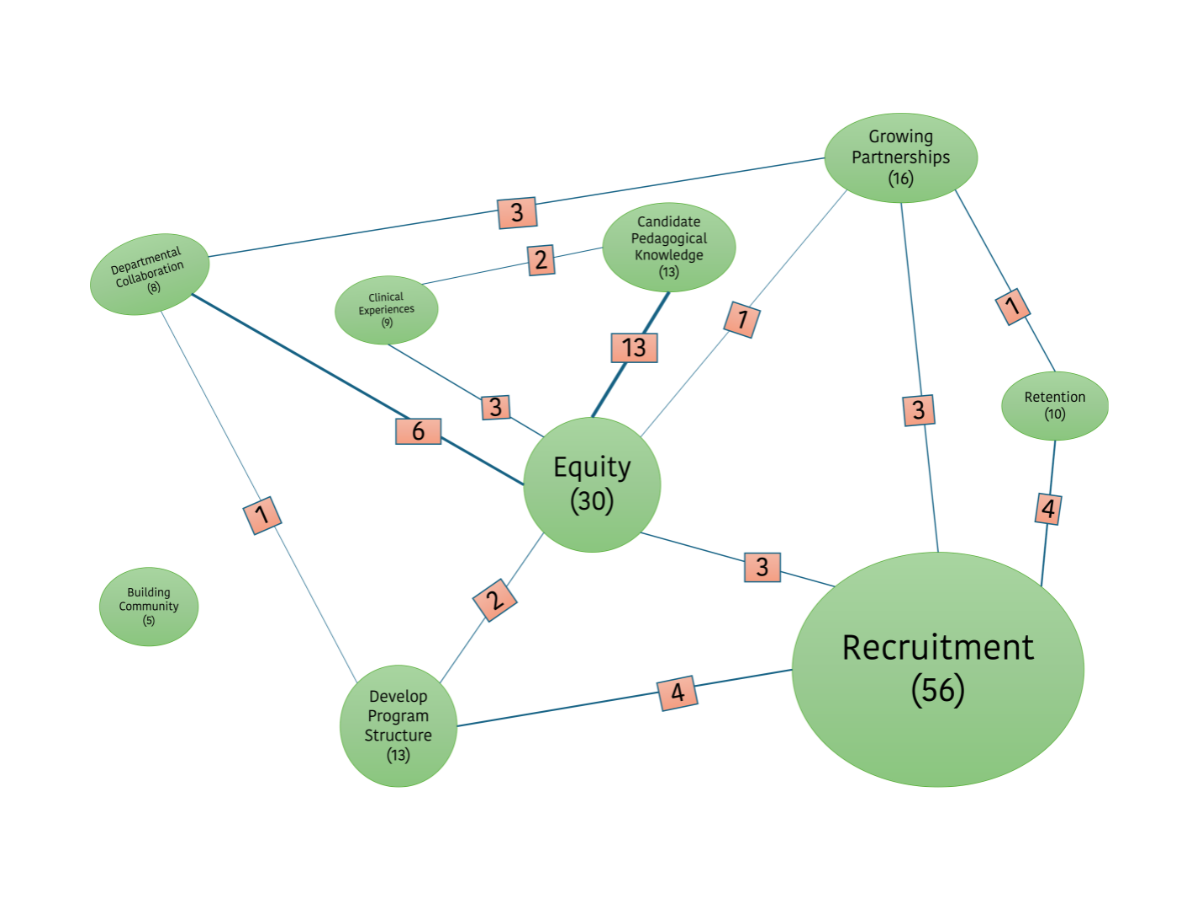
Using open thematic analysis, we identified recurring areas of focus, such as recruitment, retention, candidate pedagogical knowledge, clinical experiences, equity, developing program structure, building community, growing partnerships and departmental collaboration. We then explored how these areas co-occur across cycles. By applying graph theory, we visualized not only the occurrence of these themes, but also the ways in which they are interconnected, which highlight the shared challenges and collective efforts across NICs. (See image.)
These results point to areas where secondary mathematics teacher preparation programs may need additional support. Building community specifically refers to building community among students in a given teacher preparation program. This theme was isolated from the rest of the network of themes, which we view as a missed opportunity: How should building community connect to the work that has been done with recruitment and retention? In addition, should clinical experiences and candidate pedagogical knowledge have more connections between them? Also missing from this work is the development of content knowledge.
Overall, analyzing PDSA cycles underscores the power of our network. While each team engages in context-specific improvement, together we are building a deeper understanding of the field’s evolving priorities. We invite MTEP NICs to reflect: How do these patterns inform your ongoing and future PDSA cycles?